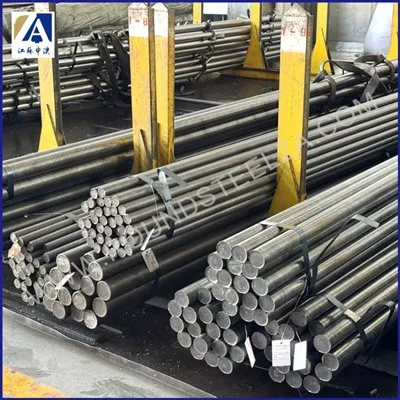
A Practical Guide to Optimizing 45# Steel Heat Treatment
Mar 09, 2026
In the high-stakes environment of mechanical manufacturing, the difference between a high-performance component and a pile of scrap metal often comes down to one critical phase: heat treatment. 45# Quenched And Tempered Steel is a favorite among engineers for its versatility, but it is not without its challenges.
Production managers frequently encounter two major headaches: quenching cracks that render parts useless, and uneven hardness (soft spots) that leads to premature failure. These defects not only increase costs but can damage your reputation.
However, these issues are rarely due to the material itself. They are usually the result of process deviations. In this guide, we explore the root causes of these defects and provide a practical roadmap for optimizing your 45# Steel Heat Treatment process.
Common Defects: Why Do They Happen?
Before fixing the problem, we must understand the mechanism behind the failure.
1.The Mystery of Quenching Cracks
Cracking is the most feared defect in heat treatment. For 45# steel, which has a carbon content of roughly 0.45%, the risk of cracking is moderate but significant.
- Root Cause: The primary culprit is usually thermal stress. When a part is quenched too aggressively (e.g., in cold water), the surface cools and contracts much faster than the core. This creates immense tension. If the steel is overheated before quenching (causing coarse grains), the material's ability to withstand this stress drops, leading to cracks.
- Material Factors: Sometimes, the raw material contains segregation or non-metallic inclusions that act as stress concentrators.
2.The Problem of Soft Spots (Insufficient Hardness)
Conversely, some parts come out of the quench tank softer than required (e.g., below HRC 40).
- Root Cause: This is often due to incomplete austenitization. If the heating temperature is too low (below Ac3) or the holding time is too short, the steel structure doesn't fully transform. Consequently, soft ferrite remains in the microstructure after cooling.
- Cooling Issues: It can also happen if the cooling speed is too slow, allowing some austenite to transform into pearlite instead of martensite.
Process Optimization Solutions
To eliminate these defects, precise control over the 45# Steel Heat Treatment parameters is essential. Here is how to optimize your process:
1.Temperature Control: The "Goldilocks" Zone
Precision is key. You must avoid both overheating and underheating.
- The Fix: strictly control the quenching temperature between 820℃ and 840℃.
- Why: Heating above 840℃ risks grain coarsening (leading to brittleness and cracks), while heating below 820℃ may leave un-dissolved ferrite (leading to soft spots). Using a calibrated thermocouple and ensuring uniform furnace temperature is non-negotiable.
2.Media Selection: Taming the Cooling Rate
The choice of quenching medium dictates the cooling curve.
- The Fix: For simple geometries, a 10% brine solution is effective. However, for complex shapes with varying thicknesses, water is often too aggressive. Switching to a PAG (Polyalkylene Glycol) quenchant or oil can significantly reduce thermal shock.
- Benefit: PAG polymer quenchants allow you to adjust the cooling rate by changing the concentration, offering a "cushion" that prevents 45# steel quenching cracks while still achieving high hardness.
3.The Critical Role of Tempering
Quenching is only half the battle. 45# Quenched And Tempered Steel gets its toughness from the second step.
- The Fix: Perform high-temperature tempering (500℃-600℃) immediately after quenching (ideally within 4 hours).
- Why: This transforms brittle martensite into tempered sorbite. It relieves the internal stresses generated during quenching, which is the ultimate defense against delayed cracking.
Case Study: From 5% Scrap to 0.5%
Consider a recent case involving a manufacturer of hydraulic pistons. They were experiencing a 5% rejection rate due to longitudinal cracks in their 45# steel shafts.
- The Diagnosis: An audit revealed they were using cold water for quenching and had inconsistent furnace loading.
- The Solution: We recommended switching to a 20% PAG quenchant and implementing a strict "hanging" loading method to ensure even heating.
- The Result: The thermal stress was reduced, and the scrap rate dropped to 0.5% within the first month. The hardness became uniform across all batches, meeting the HRC 50+ surface requirement perfectly.
Conclusion
Defects in 45# Steel Heat Treatment are not inevitable; they are solvable. By understanding the balance between temperature, cooling media, and timing, you can unlock the full potential of this versatile material. Whether it is preventing cracks through controlled cooling or ensuring hardness with precise heating, the right process turns 45# steel into a reliable backbone for your machinery.