

What is the density of cold drawn bearing steel?
Nov 20, 2025
Hey there! As a supplier of cold drawn bearing steel, I often get asked about the density of this amazing material. So, in this blog post, I'm gonna break it down for you and give you all the deets you need to know.
First things first, let's talk about what cold drawn bearing steel is. Cold drawn bearing steel is a type of steel that's been through a special process called cold drawing. This process involves pulling the steel through a die at room temperature, which makes it stronger, more precise, and gives it a better surface finish. It's commonly used in the manufacturing of bearings, which are crucial components in all sorts of machinery, from cars to industrial equipment.
Now, onto the main question: what's the density of cold drawn bearing steel? Well, the density of a material is basically how much mass it has per unit volume. For cold drawn bearing steel, the density typically falls in the range of about 7.85 grams per cubic centimeter (g/cm³). But it's important to note that this can vary a bit depending on the specific type of steel and its composition.
There are different grades of cold drawn bearing steel, and each one might have slightly different properties, including density. For example, GCr15 Cold Drawn Bearing Steel is a popular grade. GCr15 is a high - carbon chromium bearing steel. Its density is pretty close to the general range we mentioned earlier, around 7.85 g/cm³. This grade is known for its excellent wear resistance and high hardness, which makes it great for bearing applications.
Another well - known grade is Cold Drawn 52100 Bearing Steel Bar. 52100 is also a high - carbon chromium steel. It has a similar density to GCr15, usually around 7.85 g/cm³. This steel is often used in high - performance bearings because of its good fatigue resistance and ability to maintain its properties under high stress.
Why does the density matter? Well, if you're in the business of manufacturing bearings or other parts using cold drawn bearing steel, knowing the density is crucial for a few reasons. Firstly, it helps with accurate weight calculations. When you're shipping or handling large quantities of steel, knowing the weight based on the volume and density is important for logistics and cost - estimation. Secondly, in the design process, density is a factor in determining the overall mass and inertia of the components. This can affect the performance of the machinery in which these components are used.

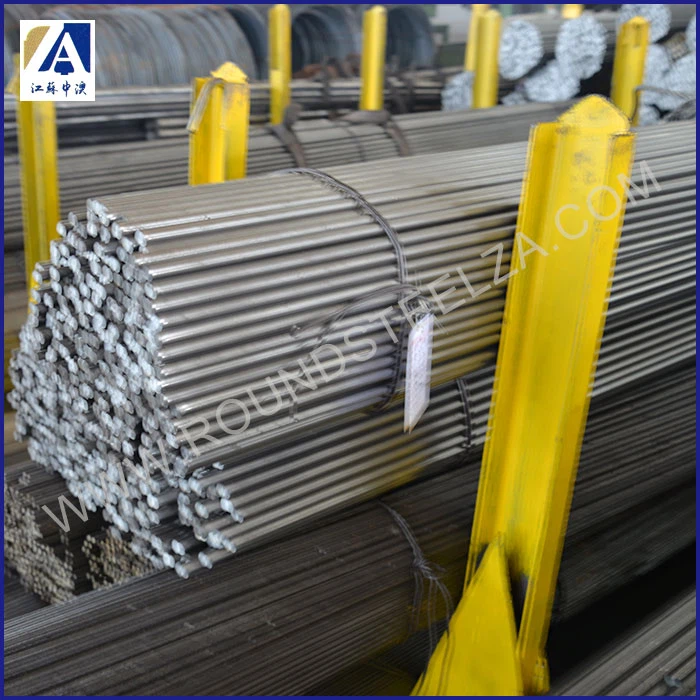
Let's take a practical example. Say you're designing a new type of bearing for a high - speed motor. You need to make sure that the bearing has the right balance of strength and weight. By knowing the density of the cold drawn bearing steel you're using, you can calculate how much the bearing will weigh and how that weight will impact the motor's performance. If the bearing is too heavy, it could slow down the motor or cause unnecessary wear on other parts.
Now, I know you might be wondering how we measure the density of cold drawn bearing steel. There are a few ways to do this. One common method is the Archimedes' principle. This involves weighing the steel sample in air and then weighing it again when it's submerged in a liquid (usually water). By comparing these two weights and knowing the density of the liquid, you can calculate the density of the steel. Another way is to use more advanced laboratory equipment, like a pycnometer, which can directly measure the volume and mass of a sample to determine its density.
As a supplier, I can tell you that we take great care in ensuring the quality and consistency of our cold drawn bearing steel. We have strict quality control measures in place to make sure that the density and other properties of the steel meet the industry standards. Our team of experts is always on top of things, from the sourcing of raw materials to the final production process.
If you're in the market for cold drawn bearing steel, whether it's GCr15 or 52100, we've got you covered. We offer a wide range of sizes and specifications to meet your specific needs. Our steel is not only of high quality but also comes at a competitive price.
So, if you're interested in purchasing cold drawn bearing steel for your projects, don't hesitate to get in touch. We're here to help you with all your questions and to provide you with the best possible products. Whether you're a small - scale manufacturer or a large industrial company, we can work with you to find the perfect solution.
In conclusion, the density of cold drawn bearing steel is an important property that affects many aspects of its use. It typically hovers around 7.85 g/cm³, but can vary slightly depending on the grade. Understanding this density can help you in design, manufacturing, and logistics. And if you're looking for a reliable supplier of cold drawn bearing steel, we're just a message away.
References
- ASM Handbook Volume 1: Properties and Selection: Irons, Steels, and High - Performance Alloys
- Handbook of Bearing Steel Technology