

How to test the quality of mild steel round bars?
Oct 28, 2026
Hey there! As a supplier of Mild Steel Round Bars, I've seen firsthand how crucial it is to ensure the quality of these products. Whether you're in the construction, manufacturing, or any other industry that relies on mild steel round bars, getting high-quality ones can save you a ton of headaches and money in the long run. So, let's dive into how you can test the quality of mild steel round bars.

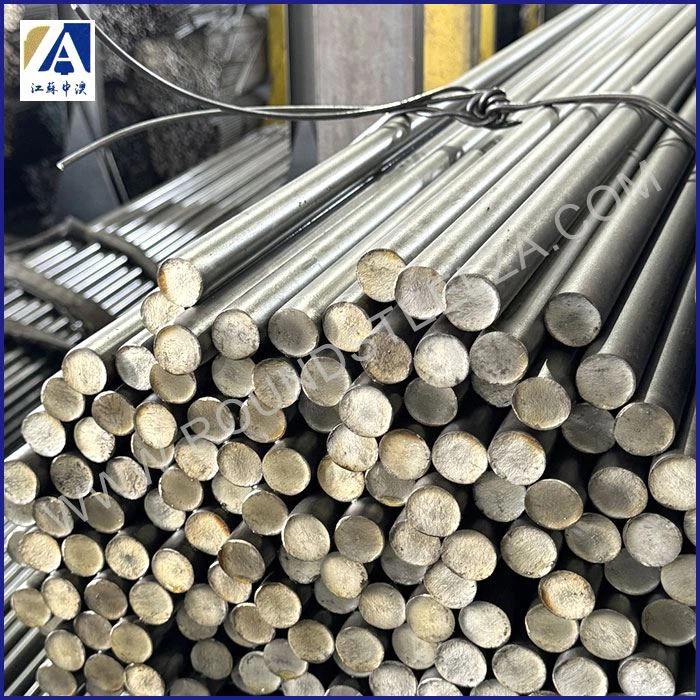
Visual Inspection
The very first step in checking the quality of mild steel round bars is a simple visual inspection. You don't need any fancy equipment for this – just your eyes. Look for any obvious signs of surface defects like cracks, scratches, pits, or rust. Cracks can weaken the bar and make it prone to failure under stress. Scratches might not seem like a big deal at first, but they can act as starting points for corrosion.
Pits are small holes on the surface that can reduce the cross-sectional area of the bar, affecting its strength. Rust is a clear indication of poor storage conditions or a low-quality protective coating. A good - quality mild steel round bar Mild Steel Round Bar should have a smooth, uniform surface. If you notice any of these issues during your visual inspection, it's a red flag.
Dimensional Checks
Accurate dimensions are key when it comes to mild steel round bars. You'll need a few basic measuring tools like a caliper and a micrometer for this. Measure the diameter of the bar at different points along its length. The diameter should be within the specified tolerance range. For example, if the bar is supposed to have a diameter of 20mm, it might be acceptable for it to be between 19.9mm and 20.1mm depending on the industry standards.
Also, check the straightness of the bar. A bent bar won't be suitable for many applications. You can place the bar on a flat surface and see if it lies flat without any significant gaps. Any deviation from the specified dimensions can lead to problems during installation or use. Our Cold Drawn Steel Round Bars are known for their precise dimensions, so you can count on them to meet your requirements.
Hardness Testing
Hardness is an important property of mild steel round bars as it gives an indication of the bar's resistance to wear, deformation, and indentation. There are several methods to test hardness, but one of the most common ones is the Brinell hardness test. In this test, a hardened steel ball is pressed into the surface of the bar with a specific load for a set period of time. The diameter of the indentation is then measured, and from that, the Brinell hardness number (BHN) is calculated.
Another popular method is the Rockwell hardness test. It's quicker and more convenient for on - site testing. A diamond cone or a hardened steel ball is used to make an indentation, and the depth of the indentation determines the Rockwell hardness value. The hardness of mild steel round bars should be within a certain range depending on the intended application. For example, Round Bars Grade SAE 1045 has specific hardness requirements that need to be met.
Chemical Composition Analysis
The chemical composition of mild steel round bars plays a huge role in determining their properties and performance. Different elements in the steel, such as carbon, manganese, silicon, sulfur, and phosphorus, can affect its strength, ductility, and corrosion resistance. For instance, carbon increases the strength of the steel but reduces its ductility.
There are several ways to analyze the chemical composition. One common method is the use of a spectrometer. This device can quickly and accurately determine the percentage of different elements in the steel sample. Another method is the chemical analysis by wet - chemical techniques, where the sample is dissolved in chemicals and then analyzed for its elemental content. As a supplier, we ensure that our SAE 1045 Carbon Steel Round Bar has the correct chemical composition to meet industry standards.
Tensile Testing
Tensile testing is a crucial test to determine the mechanical properties of mild steel round bars, such as yield strength, ultimate tensile strength, and elongation. In a tensile test, a sample of the bar is clamped at both ends and then slowly pulled until it breaks. During the test, the force applied and the amount of deformation are measured.
The yield strength is the point at which the bar starts to deform permanently. The ultimate tensile strength is the maximum stress the bar can withstand before it breaks. Elongation is the percentage increase in the length of the bar before it fractures. These properties are important as they tell you how the bar will perform under different loading conditions. Our Mild Steel Round Engineering Bars are designed to have excellent tensile properties.
Impact Testing
Impact testing is used to evaluate the toughness of mild steel round bars. Toughness is the ability of the material to absorb energy and deform plastically before fracturing. One common impact test is the Charpy V - notch test. In this test, a notched bar is struck by a pendulum hammer, and the energy absorbed during the fracture is measured.
A high - energy absorption value indicates that the bar is tough and can withstand sudden impacts without breaking. Impact testing is especially important in applications where the bars may be subject to dynamic loading, such as in machinery or bridges. It helps to ensure that the bars can perform safely under real - world conditions.
Ultrasonic Testing
Ultrasonic testing is a non - destructive testing method that can detect internal defects in mild steel round bars, such as cracks, voids, or inclusions. Ultrasonic waves are sent into the bar, and when they encounter a defect, part of the wave is reflected back. By analyzing the reflected waves, operators can determine the location and size of the internal defect.
This method is great because it doesn't damage the bar, and it can detect defects that are not visible on the surface. It's an important quality control step, especially for bars that are used in critical applications.
conclusion
Testing the quality of mild steel round bars is a multi - step process that involves a combination of visual inspection, dimensional checks, hardness testing, chemical composition analysis, tensile testing, impact testing, and non - destructive testing methods like ultrasonic testing. By performing these tests, you can ensure that the bars you're getting are of high quality and will perform well in your applications.
If you're in the market for high - quality mild steel round bars, we're here to help. We've got a wide range of products, including Mild Steel Round Bar, Round Bars Grade SAE 1045, and more. Contact us for details and let's discuss your requirements. We look forward to working with you to meet your material needs.