


Mild Steel Round Bar
Mild steel round bars are solid, round-section steel bars made from low-carbon steel with a carbon content of 0.05%–0.25% through hot rolling or cold drawing processes. Also known as mild steel round bars, they possess excellent ductility, weldability, and machinability due to their low carbon content, making them a versatile base material for metal structural components and mechanical parts...
- Fast Delievery
- Quality Assurance
- 24/7 Customer Service
Product Introduction
Mild steel round bars are solid, round-section steel bars made from low-carbon steel with a carbon content of 0.05%–0.25% through hot rolling or cold drawing processes. Also known as mild steel round bars, they possess excellent ductility, weldability, and machinability due to their low carbon content, making them a versatile base material for metal structural components and mechanical parts.


Material Properties
Mild steel round bar is primarily composed of iron with a low carbon content. It contains trace amounts of impurities such as silicon and manganese, and no excessive alloying elements. Classified as plain carbon structural steel, it features high compositional stability and is well-suited for large-scale production.
It boasts excellent plasticity, enabling it to withstand diverse plastic deformation processes including bending, stamping and tensile forming without brittle fracture. The material also has good toughness, which allows it to resist a certain degree of impact loading. Its mechanical properties remain stable at room temperature, with moderate strength that meets the requirements of conventional load-bearing applications.
This material is easy to machine and weld; welded joints form a strong bond with the base metal, eliminating the need for complex pretreatment procedures. Its mechanical properties can be tailored through forging, rolling and heat treatment processes. Tool wear during machining is minimal, which contributes to high processing efficiency and adaptability to a broad range of machining operations.
Mild steel round bar demonstrates limited corrosion resistance in dry, ambient-temperature environments, but its rust-prevention capability is relatively poor. Prolonged exposure to humid, acidic, alkaline or saline environments will readily cause oxidation and rusting. Therefore, surface treatments such as galvanizing, painting and oiling are usually required to enhance its corrosion resistance.
The material has a smooth, uniform surface and precise dimensional tolerances. Its circular cross-section ensures relatively balanced stress distribution, facilitating subsequent machining and forming into various components. It is widely used in the manufacturing of basic parts across general machinery, construction, hardware and automotive component industries.
Mild Steel Round Bar Core Advantages
Superior Machining Performance
With low carbon content, it boasts excellent ductility and plasticity, allowing for easy bending, cutting, welding, and other machining operations. It has a low tendency to crack during welding and features a simple heat treatment process, adapting to various machining scenarios without complex pretreatment.
Economical Cost and Stable Supply
Its raw materials contain no precious alloy components, leading to production costs much lower than those of stainless steel and alloy steel, thus delivering outstanding cost-effectiveness. It enjoys ample global production capacity, complete specifications and grades, short delivery cycles, and supports flexible bulk procurement.
Balanced Mechanics & Wide Adaptability
Achieving a good balance between strength and toughness, it can withstand conventional loads and certain impacts, with minimal tool wear in its untreated state. It is widely applied to basic manufacturing in various industries, including building reinforcement, mechanical parts, and automotive components.
Excellent Eco-Sustainability
Steel has a high recycling rate and can be recycled indefinitely. The energy consumption of recycling and remelting is significantly lower than that of virgin steel production, resulting in a better carbon footprint. Its corrosion resistance can be enhanced through galvanizing, coating, and other treatments, extending its overall service life.
Product Application Areas
Stirrups, anchors, embedded parts, railings, and ladders-serving as the framework for concrete and steel structures.
Shafts, pins, connecting rods, gear blanks, sprockets, and rollers-used for processing everything from raw materials to finished blanks.
Plow handles, harrow teeth, and drive rods-withstanding impacts and abrasion wear from soil and vegetation.
Control arms, stabilizer bars, and gear shift levers-requiring both strength and shock absorption, making low-carbon steel the ideal choice for achieving this perfect balance.
Wind turbine platforms, guardrails, and photovoltaic supports-exposed to wind, sand, and salt spray, with galvanized coatings providing long-lasting protection.
Product Quality Inspection
Appearance Quality Inspection
Surface defects are inspected by a combination of visual inspection and magnetic particle testing. The surface must be free of cracks, folds, and scabs. Minor scratches shall be controlled within a reasonable range. For threaded round bars, complete threads must be ensured without broken wires or cross-threading. Magnetic particle testing is supplemented for large-diameter round bars to detect minute surface and near-surface cracks, ensuring defect traceability.
Dimensional Accuracy Inspection
Based on the corresponding product standards, key dimensions are verified using professional measuring tools, with strict control over diameter tolerance, roundness, straightness, and length accuracy. The perpendicularity of the cut end face to the axis must meet requirements, satisfying production and order demands.
Mechanical Property Inspection
Random samples are taken from each batch for laboratory testing. Strength and toughness are verified through tensile tests, and hardness is measured using a Brinell hardness tester. This ensures compliance with the corresponding grade standards and processing performance requirements, with unqualified batches strictly prohibited from leaving the factory.
Chemical Composition Inspection
Spectroscopic analysis or chemical testing methods are adopted to verify the content of core elements and harmful impurities, covering all furnace numbers. This ensures the composition conforms to grade standards and prevents elemental deviations from affecting product performance.

About Us
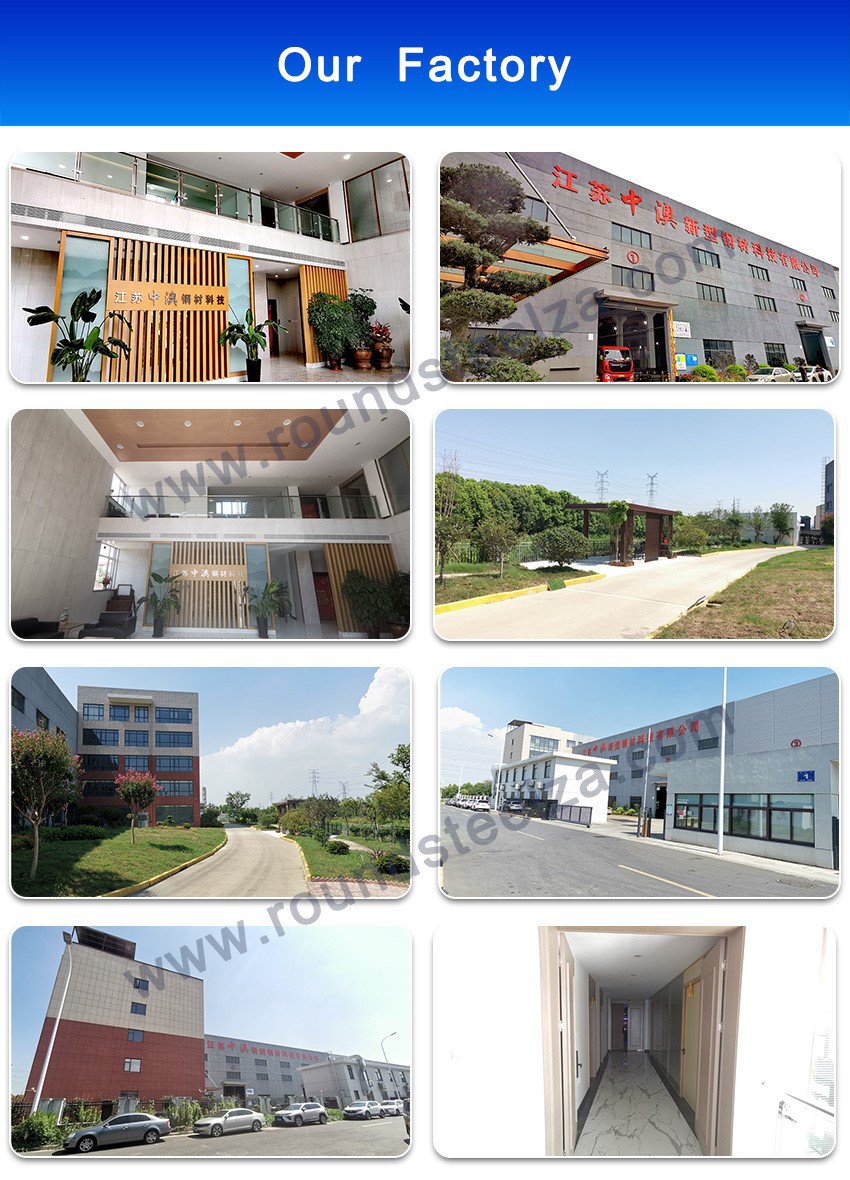
Jiangsu Zhongao New Steel Technology Co., Ltd. is located at No. 1, Baihe Road, Hudai Town, Binhu District, Wuxi City. As a professionally registered manufacturer and distributor, we hold Grade A tax credit status and focus on R&D, processing, production and wholesale of high-quality steel products.
Our product portfolio covers cold-drawn steel series (round, bright round, square, hexagonal steel) and heat-treated round steel. Supported by professional certifications, our products meet strict quality standards and customized needs of diverse customers.
Our cold-drawn steel products are widely used in clean energy (wind power fasteners), automotive parts, machinery manufacturing, medical devices and logistics equipment, showcasing excellent performance and broad applicability.
Adhering to "better products, better services", Zhongao upholds strict quality control and technological innovation. With advanced equipment and rigorous testing, we have built long-term cooperation with many enterprises via reliable services.
Choosing Zhongao means choosing professionalism and reliability. We strive to provide solid steel solutions for your projects and grow together with you for a better future.
Hot Tags: mild steel round bar, China mild steel round bar manufacturers, Bright Mild Steel, Cold Drawn Bright Bar, 12mm Mild Steel Round Bar, Cold Drawn Round Steel Bar C45, Bright Round Bar, 4140 Quenched and Tempered Steel


