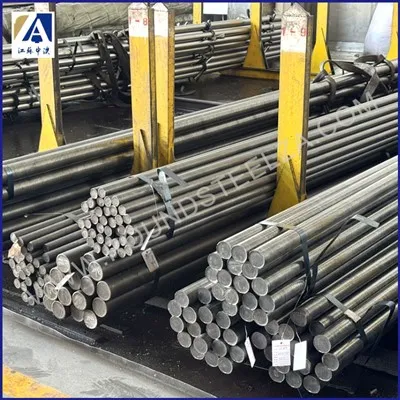
What Materials Are Commonly Used for Polishing Rods
Sep 18, 2025
Common Materials for Polishing Rods
1. Stainless Steel
Stainless steel is one of the most commonly used materials for polishing rods. It offers excellent corrosion and oxidation resistance, and can withstand long-term use in humid, acidic, and alkaline environments without rusting. After polishing, its surface can easily achieve a high gloss finish, even a mirror-like finish. It also has a moderate hardness, strength, and toughness, making it less susceptible to deformation or scratches due to external impact. This type of polishing rod is widely used in medical devices, food processing equipment, bathroom fixtures, and other applications requiring high corrosion resistance and hygiene standards.
2. Carbon Steel
Carbon steel polishing rods offer high cost-effectiveness, easy raw material availability, and relatively low processing costs, making them suitable for cost-sensitive applications where high corrosion resistance is not a requirement. The hardness and strength of carbon steel polishing rods can be flexibly adjusted based on their carbon content. Rods with higher carbon content offer greater hardness and wear resistance, making them suitable for load-bearing components such as transmission rods and support shafts in mechanical equipment. Rods with lower carbon content have greater plasticity, making them easier to process. However, carbon steel polishing rods have poor corrosion resistance and are prone to rusting when exposed to moisture for extended periods. Therefore, they typically require additional rust-proofing treatment.
3. Copper and Copper Alloys
The greatest advantage of polishing rods made of copper and copper alloys is their excellent electrical and thermal conductivity. They also boast a high surface gloss, creating a unique metallic finish after polishing, making them both practical and decorative. Brass polishing rods are slightly harder than copper and offer greater corrosion resistance. They are often used as conductive components in electrical equipment and connectors for precision instruments. Copper polishing rods are high in purity and offer excellent thermal conductivity, making them suitable for heat dissipation components or applications requiring extremely high electrical conductivity. They are also often used as decorative elements in a light luxury style.
4. Aluminum Alloys
The greatest advantage of aluminum alloy polishing rods is their light weight. With a density only about one-third that of steel, they maintain good strength, making them suitable for applications requiring lightweight design, such as aerospace components, automotive parts, and portable device brackets. After polishing, the surface forms a smooth oxide film, which not only enhances the appearance but also strengthens corrosion resistance, preventing oxidation of the aluminum inside. Furthermore, aluminum alloy polishing rods are easy to process, cut, and bend, making them easily adaptable to complex product designs and widely used in lightweight and precision machining.

If you are interested in learning more about polishing rods, please contact Jiangsu Zhongao New Steel Technology for more information. Our professional team is ready to listen to your needs and provide customized consultation and guidance.