

How long should the heat treatment time be for cold drawn bearing steel?
Nov 11, 2026
If you're a bearing manufacturer relying on cold drawn bearing steel, you know that heat treatment isn't just a "step" - it's the process that turns a semi-finished steel bar into a component that can handle millions of load cycles, temperature fluctuations, and abrasive wear. One of the most common questions I get from our customers (from small custom bearing shops to large automotive drivetrain suppliers) is: "How long should the heat treatment time be for cold drawn bearing steel?" The answer isn't one-size-fits-all - it depends on steel grade, part geometry, your heat treatment equipment, and the performance you need. As a cold drawn bearing steel supplier with 12 years in the industry, I've worked through hundreds of projects to nail down these timelines, and today I'm breaking it down for you.
First, let's start with the basics: cold drawn bearing steel isn't the same as hot-rolled bearing steel. Cold drawing compresses and stretches the steel bar, refining its grain structure, boosting surface hardness, and creating residual stress that needs to be managed during heat treatment. Skipping or rushing heat treatment leads to inconsistent hardness, soft spots that fail early, or even cracking during quenching. Most cold drawn bearing steel grades used for bearings fall into two categories: GCr15 and 52100. These are the workhorses for radial, thrust, and precision bearings, so I'll focus on them because that's what most of our customers rely on.
Let's talk about GCr15 first, which is equivalent to AISI 52100 for all practical purposes, but cold drawn GCr15 has a finer grain structure than its hot-rolled counterpart. You can learn more about its specific properties on our page: GCr15 Cold Drawn Bearing Steel. When it comes to heat treatment time, the three core stages are austenitization, quenching, and tempering - and each has its own timeline that can't be overlooked. A common mistake I see new customers make is trying to cut heat treatment time to save money, which almost always backfires. For cold drawn GCr15, the austenitization stage (where you heat the steel to transform its internal structure into a uniform austenite phase) can't be rushed. If you hold the steel too short at the austenitization temperature (usually between 830°C and 850°C), the carbon in the steel won't fully dissolve into the grain structure, leading to soft, under-hardened bearing components. For a standard cold drawn GCr15 bar of 50mm diameter, the required austenitization hold time is roughly 20 to 25 minutes. But here's the key: that hold time is based on effective thickness, not just overall length. If you're heat-treating a series of small bearing rings cut from a single 50mm bar, each ring's effective thickness is much smaller, so you can reduce the austenitization hold time to 10 to 12 minutes - but you still can't go shorter than that, because even small parts need uniform heating to avoid uneven phase transformation.
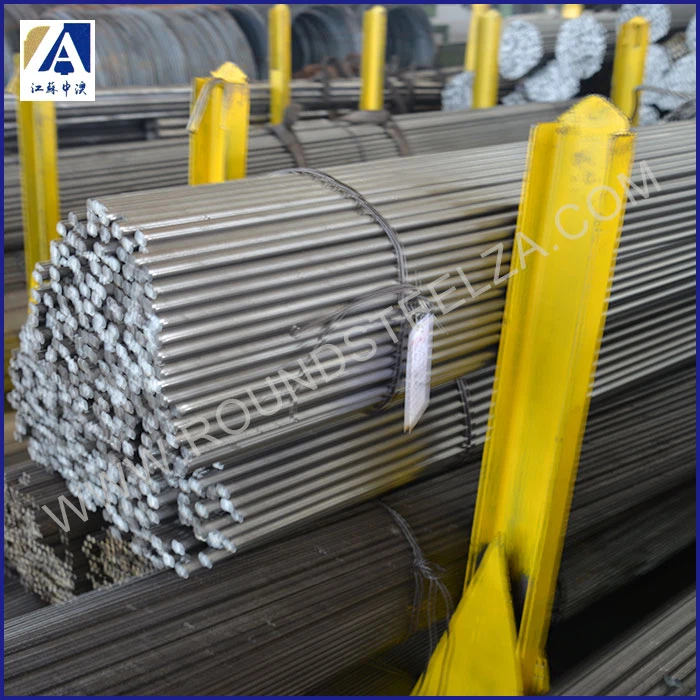

Now, 52100 cold drawn bearing steel is slightly different; it's formulated with a higher chromium content than some other bearing steels, which improves wear resistance and hardness stability. You can check the specs for cold drawn 52100 bearing steel bar on our dedicated page: Cold Drawn 52100 Bearing Steel Bar. For 52100, the austenitization temperature is similar to GCr15, but the hold time needs to be longer because the higher chromium requires more time to diffuse evenly. For a 50mm 52100 cold drawn bar, that hold time jumps to 25 to 30 minutes. Again, this scales with thickness: a 20mm 52100 bar only needs 12 to 15 minutes. The reason for the extra time here is that chromium forms carbides in the steel, and those carbides need to fully dissolve during austenitization - if they don't, you'll end up with hard, brittle carbides in the final bearing, which can cause cracking under heavy load.
Next, the quenching stage. Once you've held the steel at austenitization temperature, you need to rapidly cool it (quenching) to transform austenite into martensite - the hard, strong phase that gives bearings their load capacity. Many people forget that quenching time isn't just a "cool fast" rule; it's also dependent on the steel's composition. For cold drawn bearing steel, quenching time is measured as the time it takes to cool from 800°C to 150°C, and it should be between 15 and 20 minutes for 50mm bars. If you quench too slowly, some austenite won't transform, leaving soft retained austenite that reduces hardness and wear life. If you quench too fast, especially on cold drawn bars, the residual stress from the drawing process can cause the part to warp or crack. Cold drawn steel has more surface residual stress than hot-rolled, so a slower, more controlled quench is necessary - that means using a polymer-quenchant solution instead of water, which gives a gentler cool while still forming the martensite structure. I always advise customers to test quenching times with a sample first; even 1 or 2 minutes over or under can make a big difference in the final part's performance.
The third and final stage is tempering. This is where you heat the steel to a lower temperature (usually 150°C to 200°C for bearing steels) to reduce brittleness and relieve internal stress from quenching. Tempering is just as critical as austenitization or quenching, and its hold time is often the most debated. For cold drawn GCr15 and 52100, tempering hold time is typically 2 to 4 hours. Wait - that's longer than most people expect, right? A lot of heat treaters will hold for 30 minutes to an hour, but that's not enough. The goal here is to transform any remaining retained austenite into a more stable structure, and that takes time, especially in cold drawn steel where the residual stress is more concentrated at the surface. If you temper too short, you'll end up with bearing components that feel hard but crack under load after just a few thousand cycles. For example, a customer of mine a couple of years ago was cutting costs by tempering their cold drawn bearing steel for only 45 minutes, and their bearings were failing in less than 10% of the expected lifespan. Once we adjusted the temper time to 3 hours, the failure rate dropped to less than 1% - that's a huge difference. I will note that tempering time can be shorter for small parts, like bearing balls or rollers made from 10mm cold drawn bars; for those, 1.5 to 2 hours is sufficient.
Now, let's talk about variables that can change these timelines, because there's no universal number. First, your heat treatment equipment. If you're using a batch furnace, you need longer hold times than a continuous mesh belt furnace, because batch furnaces have uneven heating - you have to account for the time it takes for the center of the part to reach the set temperature. Continuous furnaces are more efficient, so hold times can be 20 to 30% shorter. Then there's part geometry: thin-walled bearing rings, for example, have a much larger surface area-to-thickness ratio, so they heat faster, and you can reduce hold times by 15 to 20% compared to solid bars. If you're heat-treating assemblies, like a bearing with a cage, you have to adjust for the additional mass - small cages add very little, but large steel cages might require extra time to make sure the entire assembly is at the same temperature.
Another big factor is the end use of the bearing. If you're making bearings for a low-load application, like a small household appliance, you can get away with slightly shorter heat treatment times. But if you're making bearings for heavy machinery, wind turbines, or automotive transmissions, you need the full timeline - no shortcuts. Those applications have bearings that can carry thousands of pounds per square inch, and a soft or brittle spot will lead to catastrophic failure. I had a wind turbine customer a year ago who tried to use a shortened heat treatment schedule to meet a tight deadline, and their main shaft bearings failed 6 months after installation. The cost to replace those bearings was 10 times the cost of doing the heat treatment right the first time - that's a mistake no one wants to make.
You might also be wondering: can I use a shorter heat treatment time and compensate with a higher temperature? The short answer is no. Higher austenitization temperature might dissolve carbides faster, but it also makes the steel grain structure coarser, leading to lower impact resistance. Coarse grains mean the steel is more likely to crack under shock load, which is exactly what bearings face when a machine starts or stops. So sticking to the correct temperature and hold time is non-negotiable.
As a cold drawn bearing steel supplier, I test every batch of steel we ship to make sure it responds correctly to standard heat treatment schedules. We also provide custom recommendations for customers who have specific needs - for example, if you're heat-treating a very large bearing with a 100mm diameter, we'll suggest extending the austenitization hold time to 35 minutes and tempering to 4 hours to make sure the entire part is uniform.
If you're still unsure about how to adjust heat treatment times for your specific parts, or you want to source high-quality cold drawn bearing steel that's proven to perform with standard heat treatment schedules, don't hesitate to reach out. Our team has years of experience working with bearing manufacturers across industries, and we can help you select the right steel grade and heat treatment parameters to meet your performance and cost goals.