

How does high temperature affect the properties of mild steel round bar?
Jul 11, 2025
Mild steel round bars are one of the most commonly used materials in various industries, including construction, manufacturing, and engineering. These bars are favored for their versatility, cost - effectiveness, and relatively good mechanical properties. However, the performance of mild steel round bars can be significantly influenced by high temperatures. As a supplier of mild steel round bars, understanding these temperature - related effects is crucial for providing the best products and advice to our customers.

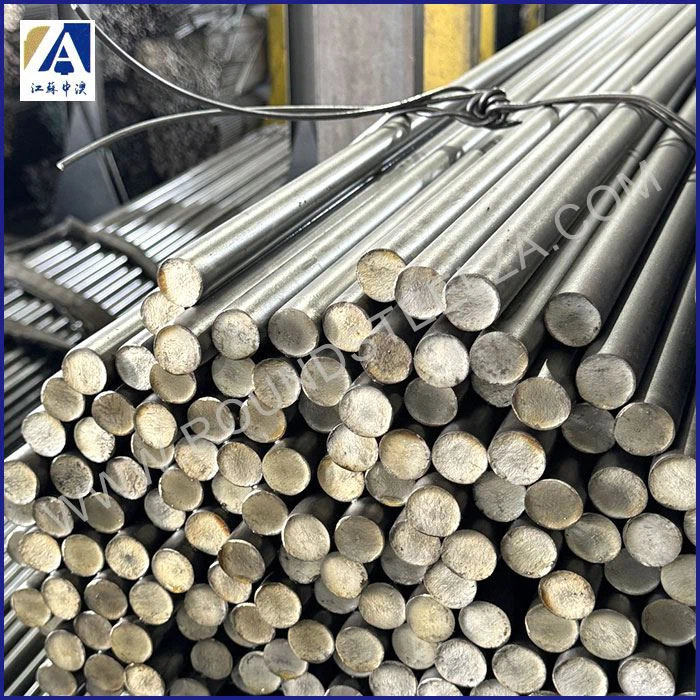
Impact on Mechanical Properties
Tensile Strength
One of the primary mechanical properties affected by high temperatures is the tensile strength of mild steel round bars. At room temperature, mild steel typically has a certain level of tensile strength that allows it to withstand pulling forces without breaking. However, as the temperature rises, the atomic structure of the steel begins to change.
The atoms in the steel lattice gain more energy at higher temperatures, which weakens the inter - atomic bonds. This results in a decrease in the material's ability to resist tensile forces. For example, in a standard mild steel round bar, as the temperature approaches 400 - 500°C, the tensile strength can start to decline significantly. At around 600 - 700°C, the reduction in tensile strength can be so substantial that the bar may deform or fail under relatively low loads compared to its performance at room temperature.
Yield Strength
Yield strength is another critical property. It represents the stress at which the material begins to deform plastically. Similar to tensile strength, high temperatures cause a reduction in yield strength. When a mild steel round bar is exposed to elevated temperatures, the dislocations within the crystal structure of the steel can move more easily. This is because the increased thermal energy provides the necessary activation energy for dislocation motion.
As a result, the stress required to initiate plastic deformation decreases. In industrial applications where the yield strength of the mild steel round bar is a key design parameter, such as in structural supports, a significant drop in yield strength due to high temperatures can pose serious safety risks. For instance, in a building under a fire situation, the mild steel bars used in the framework may experience a loss of yield strength, which could lead to structural instability.
Ductility
Ductility, the ability of a material to deform plastically before fracturing, also changes with temperature. At moderate high temperatures (around 200 - 400°C), the ductility of mild steel round bars generally increases. The increased thermal energy allows for more coordinated movement of atoms and dislocations, enabling the material to undergo more plastic deformation without breaking.
However, as the temperature rises further, beyond about 600 - 700°C, the ductility starts to decrease again. At these extremely high temperatures, the material becomes more brittle due to the formation of certain phases and microstructural changes. For example, the precipitation of carbides and the growth of grains can reduce the material's ability to deform plastically, increasing the likelihood of brittle fracture.
Microstructural Changes
Grain Growth
High temperatures can cause significant microstructural changes in mild steel round bars. One of the most notable changes is grain growth. At elevated temperatures, the grains in the steel structure have a tendency to grow larger. The driving force for grain growth is the reduction of the total grain boundary energy.
As the grains grow, the number of grain boundaries decreases. Since grain boundaries act as barriers to dislocation motion, a reduction in their number means that dislocations can move more freely. This leads to the aforementioned changes in mechanical properties, such as a decrease in strength and an increase in ductility at moderate temperatures. In a mild steel round bar, prolonged exposure to high temperatures, say above 800°C for an extended period, can result in very large grains, which can severely affect the bar's performance.
Phase Transformations
Mild steel undergoes phase transformations at different temperature ranges. At room temperature, mild steel typically consists of ferrite and pearlite phases. As the temperature rises, austenite starts to form. The transformation from ferrite - pearlite to austenite occurs at the Ac1 and Ac3 temperatures, which are around 723°C and 870°C respectively for most mild steels.
These phase transformations can have a significant impact on the properties of the mild steel round bar. For example, austenite has a different crystal structure (face - centered cubic) compared to ferrite (body - centered cubic). This difference in structure affects the material's density, hardness, and other properties. When the bar is cooled back down, the transformation from austenite to other phases also needs to be carefully controlled to achieve the desired final properties.
Thermal Expansion
Another important effect of high temperatures on mild steel round bars is thermal expansion. All materials expand when heated, and mild steel is no exception. The coefficient of thermal expansion for mild steel is approximately 12×10⁻⁶ /°C.
This means that for every degree Celsius increase in temperature, a mild steel round bar will expand by a small amount. In applications where precise dimensions are crucial, such as in machinery parts or precision engineering, thermal expansion can cause problems. For example, if a mild steel round bar is used in a tightly - fitting assembly, the expansion due to high temperatures can lead to increased stress, misalignment, or even jamming of the components.
Applications and Considerations
In construction, mild steel round bars are widely used in reinforced concrete structures. In case of a fire, the high temperatures can have a detrimental effect on the bars. To mitigate these effects, fire - resistant coatings can be applied to the bars. These coatings act as a barrier, reducing the rate at which heat is transferred to the steel.
In the manufacturing industry, when using mild steel round bars in high - temperature processes such as forging or heat treatment, the changes in properties need to be carefully considered. For example, during forging, the temperature needs to be precisely controlled to ensure that the bar can be deformed without excessive cracking or loss of strength.
As a supplier of mild steel round bars, we offer a wide range of products to meet different customer needs. Our 25 Mm Mild Steel Round Bright Bar is known for its high - quality surface finish and excellent mechanical properties at room temperature. We also supply SAE 1045 Carbon Steel Round Bar and 1040 Cold Drawn Alloy Steel Bar, which have specific compositions designed for different applications.
If you are involved in projects where mild steel round bars are required, especially those that may be exposed to high temperatures, it is essential to consult with us. We can provide you with detailed information about the temperature - related properties of our products and help you select the most suitable bar for your specific needs. Whether you are building a large - scale infrastructure project or manufacturing a small - scale precision part, we are here to assist you. Contact us to start a procurement discussion and find the best mild steel round bar solution for your project.
References
- Callister, W. D., & Rethwisch, D. G. (2014). Materials Science and Engineering: An Introduction. Wiley.
- ASM Handbook Committee. (1990). ASM Handbook, Volume 1: Properties and Selection: Irons, Steels, and High - Performance Alloys. ASM International.
- Dieter, G. E. (1986). Mechanical Metallurgy. McGraw - Hill.